LGBTQ+ Affirming
Therapy Sydney,
Queer Therapist
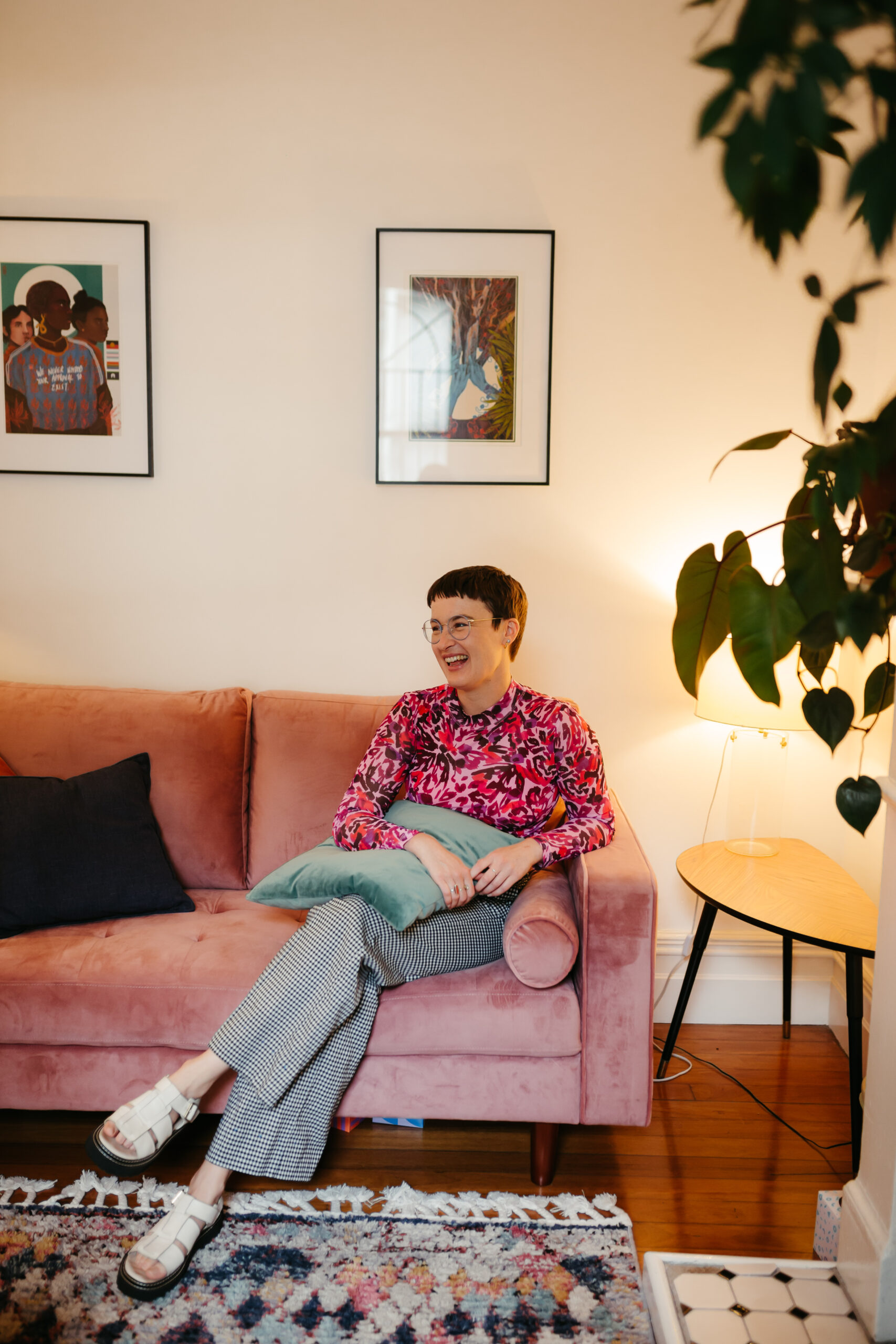
LGBTQ+ affirming therapy with Chauncey Sjostedt, PACFA certified Gestalt Therapist and proud queer woman in Surry Hills. A genuinely safe, celebratory and informed space for queer, trans and gender diverse people. No explaining your identity. No managing my discomfort.
PACFA Certified Practicing Member #29367 · Proud Queer Woman · Surry Hills & Online
Why LGBTQ+ affirming
therapy matters
Finding a therapist you can trust is hard enough. Finding one who will genuinely affirm your identity, understand the specific pressures you carry, and not require you to spend valuable session time explaining who you are, can feel almost impossible. This is one of the most common frustrations LGBTQ+ people report when accessing mental health support.
The mental health system has a complicated history with LGBTQ+ people. Homosexuality was classified as a mental disorder until 1973. Conversion therapy has caused immeasurable harm and continues to be practised in some contexts. Trans and gender diverse people are still routinely pathologised in medical and psychological settings. This history is not distant. Its effects are felt every time an LGBTQ+ person has to assess whether a therapist is safe before they can access support.
Therapy with a non-affirming or uninformed therapist can cause harm. Being asked intrusive questions about your identity, having your relationships treated as less valid, or encountering a therapist who views your queerness as something to be understood rather than affirmed can deepen existing wounds and make seeking help feel not worth the risk.
Research consistently demonstrates that LGBTQ+ people who have access to affirming, community-connected support experience significantly better mental health outcomes. Affirming therapy is not a nice extra. It is a clinical necessity for this community.

A proud
queer woman
The search for an LGBTQ+ affirming therapist in Sydney is something many queer people spend real time and energy on. It involves reading between the lines of website copy, asking around in community networks, taking the risk of an initial session and hoping for the best. I want to reduce that labour as much as I can by being explicit about who I am and how I work.
I am a proud queer woman and member of the LGBTQ+ community. My practice is grounded in personal lived experience alongside professional training and my volunteer work as a counsellor at ACON in Surry Hills. This is not a professional stance. It is who I am.
I understand what it costs to look for a therapist and to have to assess, before booking, whether they will be safe. I know what it is to sit in a room with someone who is trying hard but still missing you, or whose well-meaning questions reveal how little they actually understand. I have done this work on myself. I know what genuine affirmation feels like from the inside, and I know what its absence costs.
My undergraduate background in anthropology and gender studies gives me a theoretical foundation for understanding gender, sexuality and identity as complex, culturally shaped dimensions of human experience. Combined with my clinical training and my community involvement, this means I bring genuine knowledge, not just goodwill.
Learn more about me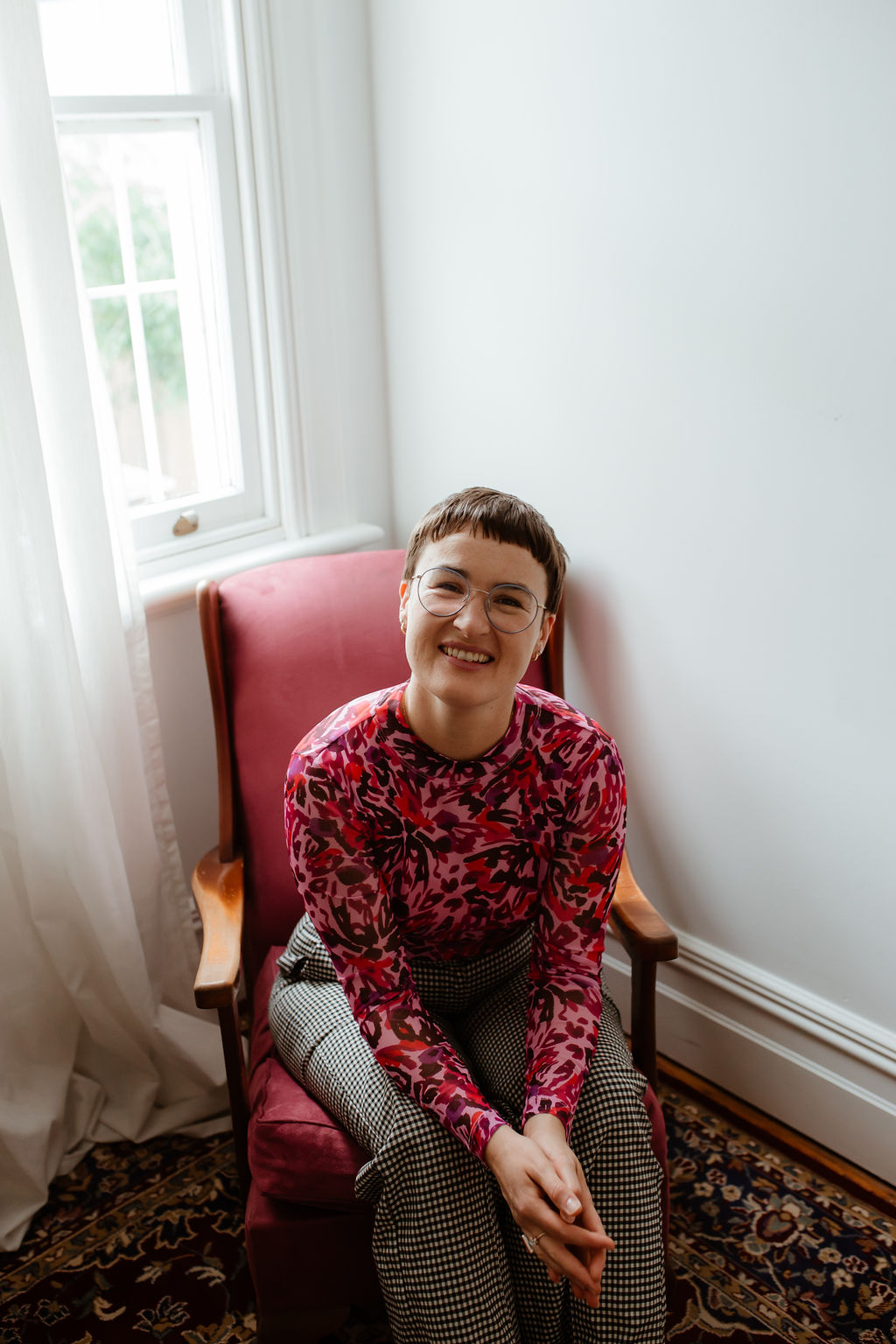
What I bring as a
queer therapist
Being LGBTQ+ affirming means more than using the right language and having a pride flag. It means bringing genuine knowledge, lived experience and a particular quality of attention to every session with a queer, trans or gender diverse client. Here is what that looks like in practice.
No Need to Explain Your Identity
You will not arrive at a session needing to explain what non-binary means, what transitioning involves, how your relationship structure works or why certain things are painful. I already know. You can spend session time on what actually matters to you rather than on educating me.
Understanding of Minority Stress and Internalised Stigma
I understand the cumulative psychological weight of minority stress, including the labour of concealment, the hypervigilance required in unsafe environments, the microaggressions that compound over time, and the specific form of internalised stigma that comes from growing up in a world that told you something was wrong with you. This does not need explaining. It is the context of the work.
Celebratory, Not Just Tolerant
There is a meaningful difference between a therapist who tolerates your identity and one who genuinely celebrates it. I am in the latter category. Queer, trans and gender diverse lives are rich, creative, courageous and full of particular kinds of beauty and community. Therapy with me holds space for the joy and the pride as well as the difficulty.
Issues I commonly
work with
LGBTQ+ people come to therapy for many of the same reasons as anyone else, and also for reasons that are particular to their specific experience of being LGBTQ+. The following are areas that come up frequently in my work with queer clients.
Coming Out, At Any Age
Coming out is not a single event. It is an ongoing process that continues across different relationships and contexts throughout life. Whether you are coming out for the first time, coming out later in life after years of living differently, or navigating the particular complexity of coming out in a cultural or religious context where this carries serious risk, therapy offers a space to be with the full weight of that process without rushing or simplifying it.
Identity Exploration and Acceptance
Exploring and accepting your LGBTQ+ identity is rarely a simple or linear process. It can involve grief for the life you expected, relief, exhilaration, confusion, fear and profound self-discovery, sometimes all at once. Many people also discover that acceptance is not a destination but an ongoing relationship with themselves. All of these experiences are welcome in the room, and there is no right way to do this and no timeline you are expected to meet.
Minority Stress, Discrimination and Microaggressions
The cumulative impact of discrimination, microaggressions and navigating a world not built for you is real, measurable and often invisible to those who do not experience it. Therapy offers a space to process these experiences, to understand their effect on your mental and physical health, and to develop resilience without minimising how genuinely hard it is to carry this weight over time.
Shame and Internalised Homophobia or Transphobia
Growing up surrounded by messages that something is wrong with who you are leaves marks, even for people who intellectually reject those messages completely. Internalised shame and stigma can show up in relationships, in how you treat your body, in who you allow yourself to be in the world and in how much of yourself you allow others to see. This work is some of the most significant work I do.
Navigating Family Dynamics and Rejection
Family rejection, conditional acceptance or the particular grief of having a family that loves you but does not fully know you is a significant source of pain for many LGBTQ+ people. This grief is real and often underacknowledged, particularly when the family has not done anything overtly cruel. Therapy offers a space to process this loss honestly, to mourn the family you wished you had, and to build a richer relationship with chosen family and community.
Relationship Diversity, Polyamory and Open Relationships
I work with people in a wide range of relationship structures including monogamous, polyamorous, open, relationship anarchist and other non-normative configurations. I approach all relationship structures with equal respect and without the assumption that any particular structure is inherently problematic. Learn more on the relationship therapy page.
Intersecting Identities, Race, Culture, Disability and Neurodivergence
Queer and trans experience intersects with race, culture, disability, neurodivergence, class and religion in ways that shape the specific reality of living as LGBTQ+. I understand these intersections and bring genuine awareness to how they shape each person's experience, rather than treating queerness as a single, uniform identity.
Safe, inclusive
and celebratory
After years of working with LGBTQ+ clients in both private practice and at ACON, I understand what a genuinely safe and affirming therapeutic space makes possible. When LGBTQ+ people do not have to spend energy managing the therapist, protecting themselves or editing their experience, something opens up. The work can go deeper and get to what actually matters. This is what I am working to create in every session.
Safety in therapy is not just about confidentiality, though that matters too. It is about being in a room with someone who sees you fully and holds what they see with genuine care. It is about not having to perform, explain or justify who you are before you can access the support you came for.
Inclusive means genuinely welcoming of all gender identities, sexual orientations, relationship structures, body types, cultural backgrounds and intersecting identities. It means not defaulting to assumptions about what a queer life looks like or what it should be working toward.
Celebratory means bringing genuine warmth and appreciation to the richness of queer life alongside the difficulty. It means recognising the creativity, resilience, community and particular kinds of beauty and freedom that queer lives often carry. Not every session is about the hard things. Sometimes it is about thriving.
Sessions are available in person in Surry Hills on Saturdays and online on Wednesday afternoons (Glebe) and Saturday mornings (Surry Hills). You do not need a GP referral or any documentation to book. Full details on the appointments page. You can also visit the gender identity and diversity therapy page for more specific information on gender-related work, and the self-esteem and body image page for work on identity, self-worth and body relationship.
Common questions
Questions about LGBTQ+ affirming therapy. More on the full FAQ page.
Book a session
-
LGBTQ+ affirming therapy means the therapist genuinely affirms queer, trans and gender diverse identities rather than treating them as problems to be explored or resolved. It means you do not need to explain or justify your identity, manage the therapist's discomfort, or spend session time educating them. Chauncey is a proud member of the LGBTQ+ community and brings personal as well as professional understanding to this work.
-
Yes. Chauncey is a proud queer woman and a member of the LGBTQ+ community. Her practice is grounded in personal lived experience alongside her professional psychotherapy training and her ongoing voluntary work as a counsellor at ACON in Surry Hills. This is not a performative stance or a marketing strategy. It is who she is, and it shapes the quality of her presence in every session with LGBTQ+ clients.
-
Yes, absolutely. Many LGBTQ+ people come to therapy not because they are in crisis but simply because they want a space in which their full identity is welcome and they can explore what matters to them without managing anyone's reactions. You do not need to be struggling to benefit from therapy. Thriving is also a valid reason to seek support.
-
Minority stress refers to the chronic psychological burden that comes from being a member of a stigmatised group. For LGBTQ+ people, this includes the cumulative effects of discrimination, microaggressions, hypervigilance about safety, concealment of identity and internalised stigma. Research consistently shows that minority stress contributes to elevated rates of anxiety, depression and other mental health difficulties in LGBTQ+ communities. Understanding and working with minority stress is a core part of affirming therapy.
-
Yes. I understand that queer and trans identities intersect with race, culture, class, disability and other dimensions of identity in ways that shape the specific experience of being LGBTQ+. I approach these intersections with genuine awareness rather than treating queerness as a single, uniform experience. If your particular intersection is not something I have direct experience of, I will say so honestly and work with you accordingly.

Take the first step
towards feeling better
Book an LGBTQ+ affirming therapy session in person in Surry Hills on Saturday mornings, or online via secure video on Wednesday afternoons (Glebe) and Saturday mornings (Surry Hills). Sessions are 50 minutes. No GP referral or Mental Health Care Plan required. A free introductory call is available before the first session. I respond to all enquiries within 48 hours.