Relationship and
Interpersonal
Therapy Sydney
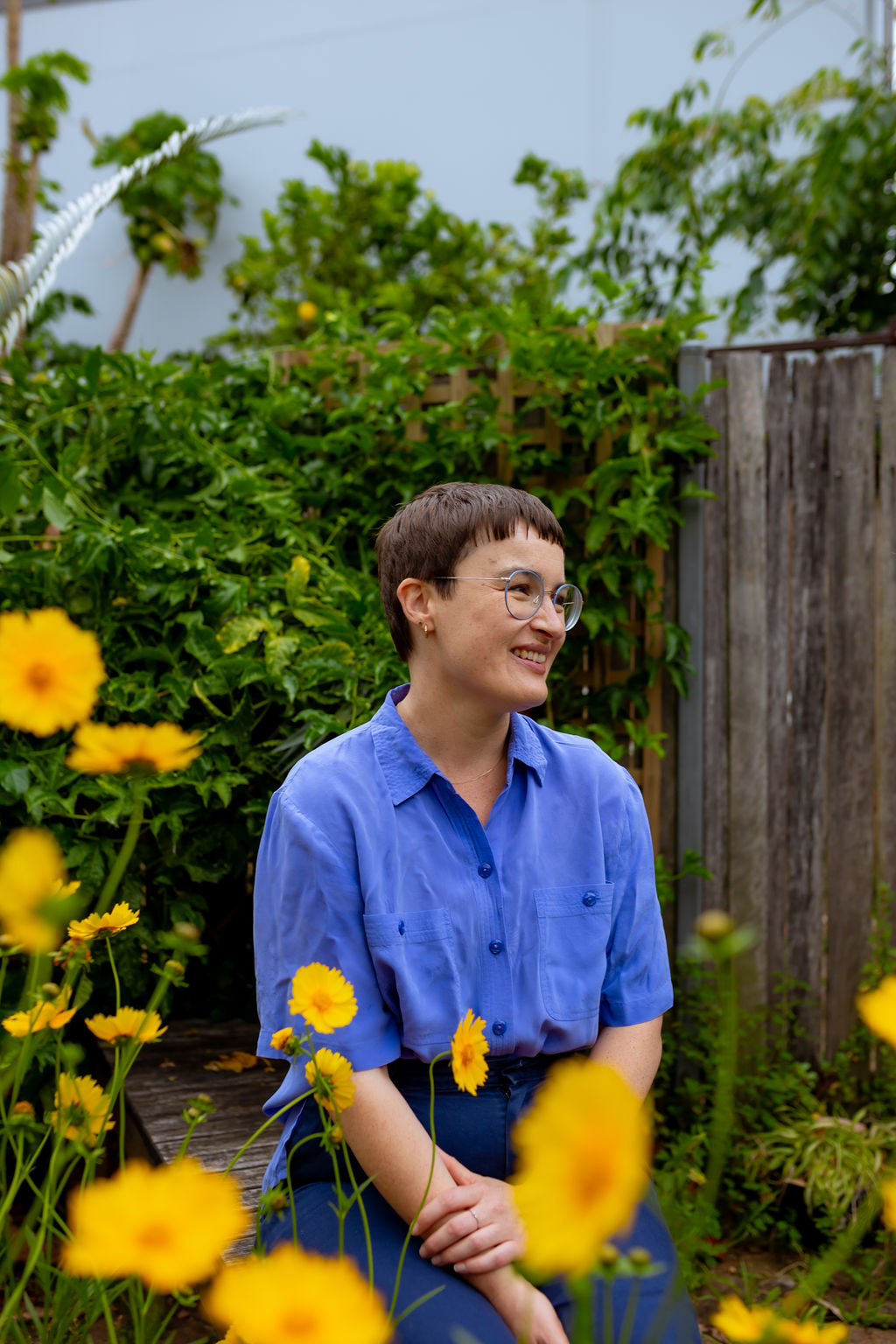
Individual therapy for relationship and interpersonal difficulties with Chauncey Sjostedt, PACFA certified Gestalt Therapist in Surry Hills. I work with one person at a time to help you understand your relational patterns, develop clearer communication and build more nourishing connections.
PACFA Certified Practicing Member #29367 · Individual Therapy Only · Surry Hills & Online
Relationship challenges
I work with
The way we relate to others is one of the most fundamental dimensions of who we are. It is also one of the most shaped by experiences we did not choose: the relationships we grew up in, the patterns we absorbed before we had language for them, the ways we learned to seek safety or avoid pain in connection with others. Much of this happens below conscious awareness, which is why insight alone is rarely enough to change it.
Relationship difficulties are among the most common reasons people seek therapy, and among the most painful to carry. They affect our sense of self, our capacity for joy and our ability to feel genuinely known by another person. The following are some of the most common challenges I work with.
Communication Breakdown
When conversations repeatedly go wrong, when you find yourself saying things you do not mean, withdrawing when you most need to be present, shutting down when emotions run high, or feeling fundamentally unable to be heard by the people who matter most, therapy can help you understand what is happening beneath the surface. Good communication is rarely just a skill problem. It is usually a pattern with deeper roots, shaped by what you learned in earlier relationships about what is safe to say and what must be kept hidden.
Patterns That Keep Repeating
If you notice the same dynamics showing up across different relationships, with different partners, friends, colleagues or family members, that recurring pattern is yours to explore. It is not evidence of your failure or damage. It is evidence of a learned strategy that once made sense and is now causing you difficulty. Therapy offers a space to understand where it came from, what it is protecting you from, and how you might relate differently without having to force change through willpower alone.
Boundaries, Setting and Holding Them
Difficulty with boundaries is often rooted in a fear of disappointing others, losing connection or being seen as difficult or demanding. For many people, having boundaries was not modelled in their families of origin, or was actively punished. Learning to set and hold boundaries as an adult is not about becoming less caring or less available. It is about developing a clearer, more grounded sense of where you end and others begin, which actually makes genuine connection more possible rather than less. Gestalt therapy is particularly well suited to this work because it addresses the emotional and relational roots of the difficulty rather than just teaching techniques.
Attachment and Connection Difficulties
Attachment patterns formed in early relationships shape how we connect throughout our lives. They operate largely outside our awareness and repeat themselves with a stubbornness that can be confusing and demoralising to experience. Whether you find it hard to trust, tend to cling when you feel insecure, keep people at arm's length even when you genuinely want closeness, or swing between urgency and withdrawal, therapy can help you understand your attachment style and develop a more secure and flexible way of being in relationship with yourself and others.
Loneliness and Isolation
Loneliness is one of the most significant predictors of poor mental health and one of the most commonly minimised presenting concerns in therapy. It can coexist with a busy social life, a long-term relationship or a full-looking life on the outside. Therapy can help you understand what is getting in the way of genuine connection and begin to build a richer relational world.
Post-Breakup Processing
The end of a significant relationship brings grief, confusion, loss of identity and sometimes a painful and disorienting review of what went wrong. Therapy offers a space to process the relationship honestly, without either excessive self-criticism or avoidance. Understanding your patterns from this relationship, what you brought, what you repeated and what you genuinely could not have done differently, supports you in approaching future connections with greater self-knowledge and less likelihood of repeating the same cycle.
Individual therapy for
relationship issues, not couples
I work with individuals only. I do not offer couples therapy or joint sessions. If you are looking for couples therapy, I am happy to point you in the direction of a suitable referral.
That said, individual therapy can be profoundly effective for relationship difficulties. You do not need your partner in the room to do meaningful work on how you relate. By understanding your own patterns, attachment style, communication habits, boundaries and ways of seeking or avoiding closeness, you can create real change in your relationships, even when working alone.
In fact, many people find that the changes they make in individual therapy ripple outward in ways they did not anticipate: not only in their primary relationship but in friendships, family dynamics and even workplace relationships. When your relationship with yourself changes, the relational field around you changes with it.
If you are looking for couples therapy, I am happy to suggest a referral to a suitable colleague. If you are unsure whether individual or couples therapy is the right step, please feel free to reach out and we can discuss it honestly.
Gestalt approach
to relationships
One of the things that makes Gestalt therapy particularly well suited to relationship work is that it uses the relationship between therapist and client as a live window into how you relate to others. This is not just theoretical. It happens in real time, in the room between us, in ways that can be genuinely illuminating.
The Relationship Between Us Becomes the Teacher
In Gestalt therapy, the therapeutic relationship is not a neutral backdrop. It is material. How you show up with me, what you assume I think of you, how you manage conflict or approval in our sessions, how you ask for what you need, what you withhold and why: all of these are windows into how you relate more broadly. We can explore them directly rather than just talking about them abstractly.
This is called working in the relational field and it is one of the most powerful aspects of Gestalt work. When you can see your patterns as they happen, rather than only in retrospect, something genuinely different becomes possible.
Noticing Relational Patterns in the Room
Patterns that were formed in earlier relationships tend to show up everywhere, including in the therapy room. Rather than treating this as a problem, Gestalt invites us to notice these patterns with curiosity as they arise. A pattern noticed in the moment is far easier to work with than one reconstructed from memory. This is why the therapeutic relationship is so central to relational work in a Gestalt approach.
I bring genuine care, honesty and appropriate transparency to the work. I am not a blank screen. I am a real person in relationship with you, and that realness is part of what makes the relational work possible. I will notice things with you, sometimes gently point to what I observe happening between us, and invite you to explore it rather than move past it. This requires a degree of courage and trust, and I take that seriously.
Over time, this kind of relational awareness tends to transfer. People find that they start noticing their patterns in real time in their everyday relationships rather than only in retrospect. That moment of noticing, of having enough space to choose a different response, is often where real change begins.

Who this is for
Relationship work in therapy does not require a dramatic crisis as its starting point. Many people come to this work simply feeling that something is not quite right in how they connect, that they keep ending up in the same place despite their best intentions, or that the closeness they want keeps slipping away in ways they cannot explain. All of these are valid and valuable starting points.
This work is for adults who want to understand and change the way they relate to others. It suits people who are in a relationship and finding it difficult, people who have recently ended a relationship and want to make sense of it, people who notice recurring patterns across their relational history, and people who struggle with loneliness, isolation, intimacy or connection.
It is also for people who want to develop clearer boundaries, more effective communication or a more secure and grounded sense of self in relation to others. You do not need to be in crisis to benefit from this work. Many people come simply wanting to relate more freely and authentically, to stop managing and start connecting, to be more genuinely themselves in the company of the people they care about.
Sessions are available in person in Surry Hills on Saturdays and online on Wednesday afternoons (Glebe) and Saturday mornings (Surry Hills). Full practical details including fees, availability and cancellation policy are on the appointments page. No GP referral or documentation is required.
I work with LGBTQ+ people navigating the particular dynamics of queer and trans relationships, including those in non-monogamous or relationship-diverse structures. All relationship forms are welcomed without judgment. See also the LGBTQ+ affirming therapy page for more on this.
Related areas that often intersect with relationship work include self-esteem and identity and complex family dynamics.
Book a Session
-
No. I work with individuals only and do not offer couples therapy or joint sessions. However, individual therapy is often profoundly effective for relationship difficulties. Working on your own relational patterns, attachment style, communication habits and ways of seeking or avoiding closeness can lead to real and lasting change in your relationships, even when your partner or other people are not in the room. If you need a referral to a couples therapist, I am happy to suggest one.
-
Yes, significantly. Individual therapy can help you understand the relational patterns you carry, where they came from and how they show up in your current relationships. It can help you develop clearer communication, firmer boundaries and a more secure relationship with yourself. Many people find that changes they make in individual therapy ripple out into all their relationships in ways they did not anticipate.
-
Interpersonal therapy focuses on the connection between your relationships and your psychological wellbeing. It explores how the quality of your connections affects your mental health and, equally, how your mental health affects your capacity to connect. In Chauncey's Gestalt-based approach, this also involves using the therapeutic relationship itself as a live window into how you relate to others more broadly, turning the therapy room into a place where relational patterns can be noticed and worked with directly.
-
Yes. Loneliness is one of the most significant predictors of poor mental health and one of the most chronically underaddressed presenting concerns in therapy. Many people feel ashamed of it or uncertain whether it counts as a real problem. It does. Therapy can help you understand what is getting in the way of genuine connection, whether that is anxiety, past relational wounds, self-protective strategies or simply circumstances that have isolated you, and to begin building a more nourishing relational life.
-
Yes. Chauncey is a proud member of the LGBTQ+ community and brings particular understanding to relationship difficulties that arise within queer, trans and gender diverse contexts, including non-monogamous and relationship-diverse structures, the specific dynamics of LGBTQ+ relationships and the impact of minority stress on intimacy and connection. All relationship structures are welcomed without judgment.

Take the first step
towards feeling better
Book a relationship and interpersonal therapy session in person in Surry Hills on Saturday mornings, or online via secure video on Wednesday afternoons (Glebe) and Saturday mornings (Surry Hills). Sessions are 50 minutes. No GP referral or Mental Health Care Plan required. A free introductory call is available on request before the first session. I respond to all enquiries within 48 hours.