Gender Identity and
Diversity Therapy
Sydney
Affirming, non-gatekeeping therapy for gender identity and diversity with Chauncey Sjostedt, PACFA certified Gestalt Therapist in Surry Hills. I welcome gender questioning people, non-binary and genderqueer individuals, trans and gender diverse people, and those navigating transition or supporting someone who is.
PACFA Certified Practicing Member #29367 · Queer Affirming · Surry Hills & Online
Affirming,
not gatekeeping
Gender affirming therapy begins with a simple premise: your gender identity is valid. It does not require assessment, proof or the approval of a therapist. My role is not to evaluate your gender experience, but to support you in exploring it with curiosity and to help you navigate your life with greater freedom and wellbeing.
For some trans and gender diverse people, therapeutic and medical systems have involved experiences of gatekeeping. My practice aims to offer a collaborative, affirming alternative. I approach gender identity with the same respect I bring to any other aspect of a person's experience: with genuine interest, without judgment, and without a predetermined view of where things should land.
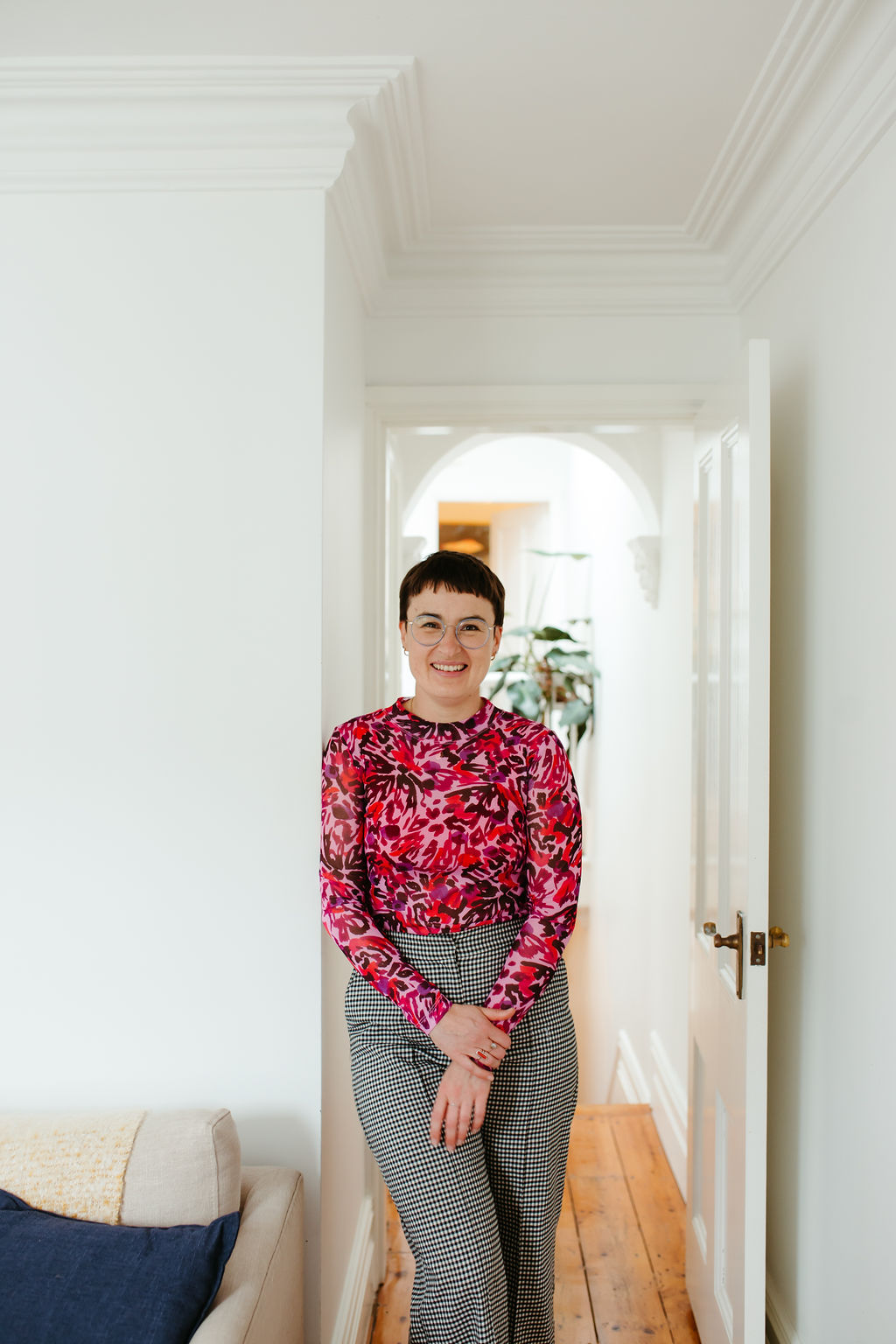
I am a proud queer woman and member of the LGBTQ+ community. My undergraduate background is in anthropology and gender studies, which means I understand gender not as a binary biological fact but as a complex, culturally shaped and deeply personal dimension of human experience. You do not need to explain or justify your identity to me.
Book a session

Who this
is for
This work is for anyone whose gender experience is part of what they want to explore, understand or navigate more freely. You do not need to have a clear identity or a defined goal to begin. Uncertainty and questioning are completely valid starting points. So is knowing exactly who you are and simply wanting a therapist who affirms that without hesitation.
People come to gender identity therapy for many different reasons: to make sense of a growing awareness, to process the impact of discrimination or family rejection, to navigate transition practically and emotionally, or simply to have a consistent space in which their full self is welcome. All of these are good enough reasons.
Gender Questioning and Exploration
If you are uncertain about your gender identity or want space to explore it without pressure to arrive at a conclusion, this is the right place. Therapy is not about finding the right label. It is about developing a clearer and more compassionate relationship with your own experience. Questioning is not a problem to be solved.
Non-Binary and Genderqueer Identity
I work with people across the full spectrum of non-binary and genderqueer experience. This includes people who are newly understanding their identity as non-binary, those who have been living outside the gender binary for years, and those navigating a world that does not always accommodate or recognise who they are.
Trans and Gender Diverse People
Trans and gender diverse people deserve therapy that affirms rather than interrogates their experience. I work with trans people at any stage, whether you are early in understanding your identity, partway through transition or well into living your gender fully. I bring knowledge, lived experience as a queer person and genuine respect.
Social, Medical and Legal Transition Support
The process of social, medical or legal transition can involve a great deal of navigating: systems, relationships, workplaces, families and your own changing sense of self. Therapy can offer a consistent space in which to process what is happening and to make decisions that feel genuinely yours rather than driven by external pressure or internal urgency.
Support People and Partners
Partners, parents and close support people navigating their own responses to a loved one's gender identity or transition are also welcome. These experiences can be complex. I work with support people in a way that consistently centres affirmation of the gender diverse person while genuinely supporting the person in front of me.
What we might
explore together
Gender identity work in therapy is rarely just about gender. It tends to touch on self-concept, relationships, family history, body, shame and the ways the world has responded to who you are. The following are areas that often come up, though sessions are led by you rather than any predetermined agenda.
Understanding Your Gender Experience
Making sense of your gender experience, its history, its texture, the way it has shaped your life and the ways it has been constrained, is often valuable in itself. Therapy offers a space to think, feel and speak about your gender in ways that may not be available elsewhere, without needing to perform certainty or clarity you do not yet have.
Navigating Coming Out
Coming out, whether as trans, non-binary, genderqueer or any gender identity outside the mainstream, can be a complex and ongoing process that involves different experiences with different people and in different contexts. Therapy can support you in navigating these conversations and their aftermath, and in managing the gap between who you are and what others are ready to receive.
Managing External Pressures and Discrimination
Living as a gender diverse person in a world that does not always affirm or accommodate that experience takes a real psychological toll. Minority stress, microaggressions, discrimination, medical gatekeeping and family or workplace pressures all have cumulative effects. Therapy offers a space to process these experiences and to develop resilience without minimising the genuine difficulty of what you are navigating.
Intersections of Gender with Other Identities
Gender does not exist in isolation. It intersects with race, culture, sexuality, disability, neurodivergence, class, religion and other dimensions of identity in ways that shape the specific experience of being gender diverse. I understand these intersections and bring that awareness to the work rather than treating gender as a single axis.
Body Relationship and Dysphoria
The relationship between gender identity and the body can be complicated, distressing or simply in flux. Whether you experience gender dysphoria, body dissatisfaction or simply a desire to understand your relationship to your body more clearly, Gestalt and somatic approaches can support this work in a grounded, respectful and body-aware way. Read more on the self-esteem and body image page.
Gender Studies and
Lived Experience
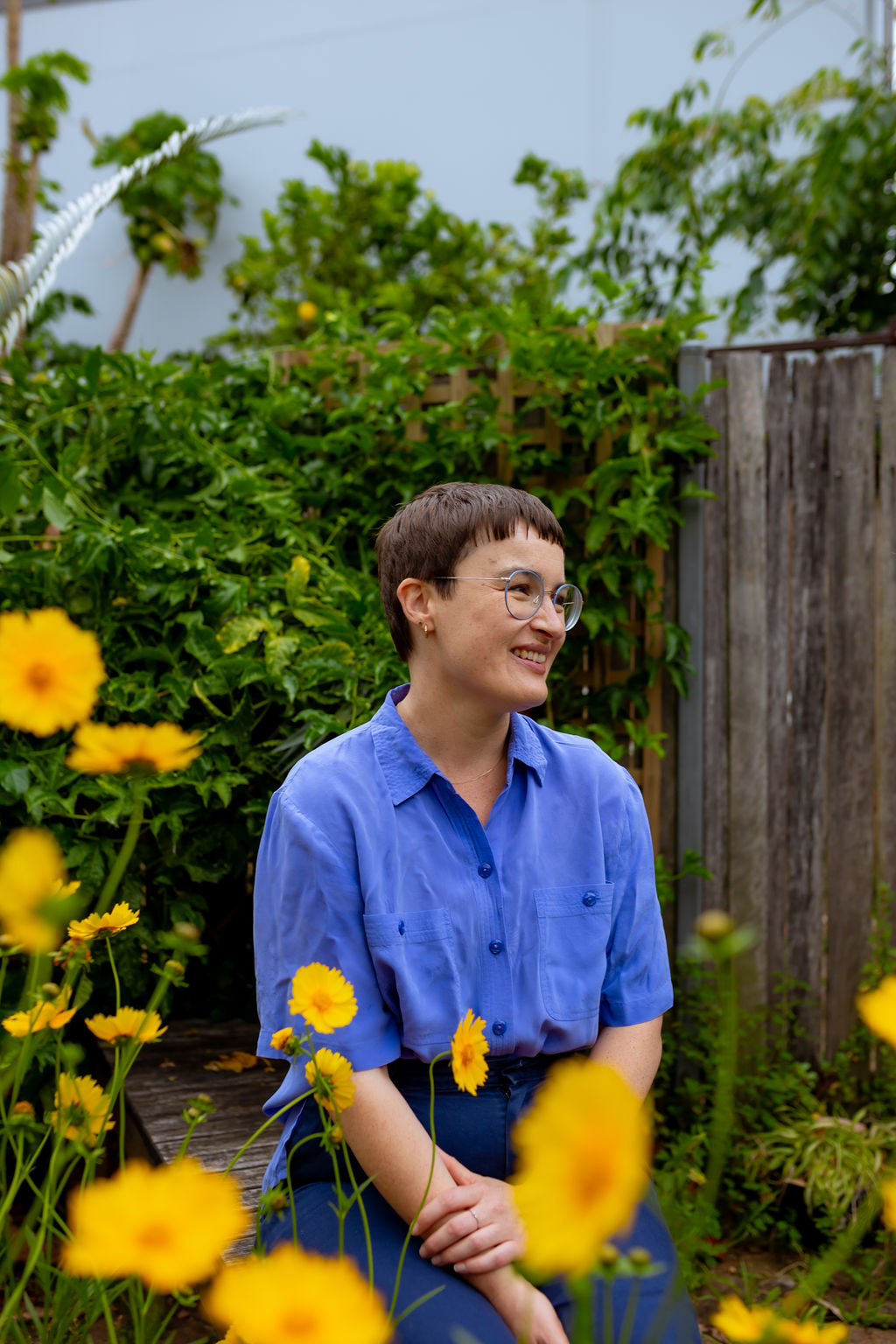
My undergraduate background is in anthropology and gender studies. This means I understand gender not as a fixed binary but as a complex, socially constructed and personally experienced dimension of human life. I bring this understanding to every session, which means I do not need the basics explained and I am not working from an outdated or pathologising framework.
I am a proud queer woman and member of the LGBTQ+ community. My experience of navigating my own identity, and of supporting others in the community through my volunteer work at ACON in Surry Hills, informs the care and specificity I bring to this work. I understand what it is to search for a therapist who is genuinely safe, not just tolerant, and I take seriously the responsibility of being that person for my clients.
How I work
I work primarily from a Gestalt psychotherapy framework, which is present-focused, relational and body-aware. This means we work with what is actually happening in your experience right now, not just what you think about your situation. Gender identity work often involves the body in ways that purely cognitive approaches do not address, and Gestalt allows space for that.
I also draw on my background in gender studies, my lived experience as a queer person, Internal Family Systems for working with different parts of self, and Somatic Experiencing for supporting the body's experience of identity and transition. The work is always collaborative and genuinely led by what matters most to you, not by any external framework or timeline.
Sessions are 50 minutes, one-to-one and available in person in Surry Hills on Saturdays (9am-2pm) or at the Genki Centre in Glebe on Wednesdays (2pm-7pm). You do not need a GP referral or any other documentation to book. Full details on the appointments page.
If you have questions before booking, including questions about whether I write letters or about how I work, please reach out directly via the contact form. I am happy to have an honest conversation before any commitment is made.
Common questions
Questions about gender identity therapy. More on the full FAQ page.
Book a session
-
Gender affirming therapy means the therapist accepts and affirms your gender identity as you understand it, without questioning it, challenging it or requiring you to prove it. It is the opposite of conversion therapy or gatekeeping. In an affirming approach, the therapist starts from the position that your gender identity is real and valid. My role is not to assess or diagnose your gender experience but to support you in exploring it with curiosity and to help you navigate your life with greater freedom, authenticity and wellbeing.
-
This is something to discuss directly, and I appreciate you asking. I am not primarily a letter-writing service, and I think it is important to be transparent about that from the outset so that your expectations are clear. However, I do understand that access to gender affirming medical care is important and sometimes time-sensitive, and I am genuinely not a gatekeeper. If you are seeking support and a letter may be needed at some point in that process, please reach out and we can have an honest, direct conversation about what is possible and what the process would look like between us.
-
Yes, absolutely. Uncertainty is a completely valid place to begin. Therapy is not about arriving at a definitive label or a clear conclusion. It is about creating a space in which you can explore your gender experience with curiosity and without pressure. Many people find that having a safe, unhurried space to sit with gender questions is genuinely valuable, regardless of where that exploration leads.
-
Yes. I work with people across the full spectrum of gender diversity, including non-binary, genderqueer, genderfluid, agender and other gender identities that sit outside the binary. This includes people who have been living a non-binary identity for years as well as people who are newly understanding themselves in this way. My background in gender studies and my lived experience as a queer woman means I do not need these identities explained, justified or defended. You can simply be who you are, and we can work on what matters to you from there.
-
Yes. Partners, parents and other support people navigating their own responses to a loved one's gender identity or transition are also welcome. These experiences can be complex and deserve their own space. I work with support people in a way that consistently centres affirmation of the gender diverse person while also genuinely attending to the experience of the person in front of me.
What to expect
Sessions are 50 minutes, individual and one-to-one. In-person sessions are available on Saturday mornings in Surry Hills (9am-2pm) and Wednesday afternoons at the Genki Centre, Glebe (2pm-7pm). Online sessions are also available on Saturday mornings.
You do not need a GP referral, a diagnosis or any prior documentation. There is no intake process to navigate. You simply reach out and we arrange an appointment. If you are not yet ready to book, a free introductory call is available on request before the first session.
Full details including fees, availability and cancellation policy are on the appointments page. If you have specific questions about how I work with gender identity, please contact me directly via the contact form. I welcome these conversations and am happy to answer anything before you commit to a session. There are no wrong questions.

Take the first step
towards feeling better
Book a session in person in Surry Hills on Saturdays, or online on Wednesday afternoons (Glebe) and Saturday mornings (Surry Hills). No GP referral required. I respond to all enquiries within 48 hours.